Madeleine Silfverberg
Crow GirlMadeleine Silfverberg is Victoria Bergman’s daughter, separated from her as a baby and raised by Charlotte and Per-Ola Silfverberg. Her adult return to Stockholm turns a history of abandonment and institutional care into a planned reckoning. Yet the revenge she prepares does not determine her final choice: when she finds Victoria again, Madeleine lowers her revolver and lets her live, refusing to continue the family’s cycle of violence.
Identity and early separation
Madeleine enters the story through the gulf between the infant Victoria remembers as hers and the young woman she has become. In a fractured moment on her kitchen floor, Sofia Zetterlund recognizes that she has a daughter in Denmark named Madeleine, and remembers once going to find her. The recollection is precarious: Sofia knows she will soon have no memory of lying there or of thinking about going to work. The knowledge of Madeleine appears inside a consciousness that cannot reliably hold it.
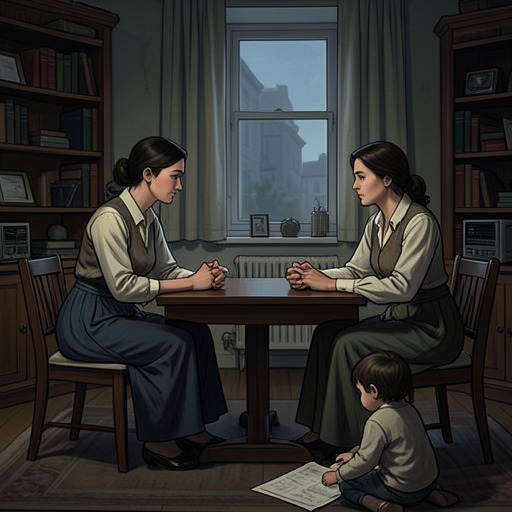
A second memory gives the separation a physical setting. Victoria sees a baby in a pram through an open glazed double door, while Charlotte and Per-Ola Silfverberg watch a football match on television. She thinks of herself as an egg-laying machine and understands the scene as taking back what is hers. The language makes motherhood inseparable from dispossession: the child is present, but Victoria’s claim to her has already been overtaken by the arrangement that places the baby with the Silfverbergs.
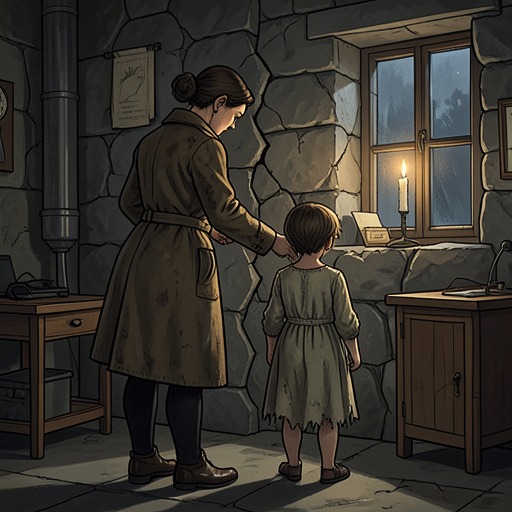
Charlotte later tells the police that Madeleine came to them as a baby because her mother was very young and suffered from severe mental illness. Charlotte describes the couple as having loved Madeleine as their own, but also recalls a childhood marked, in her account, by illness, constant whining, and nights of inconsolable screaming. Her description turns suffering into defect: she dismisses the child as damaged goods rather than asking what might have happened to her. When the family relationship ended, Madeleine was taken into care by social services and placed in a children’s psychiatric clinic. Charlotte presumes that she remains in Denmark. She can recall Madeleine’s blue eyes and fair hair, but cannot say whether she has dyed her hair or what she looks like now.
Return and the logic of revenge
Madeleine’s years in Danish institutions have not allowed her to forget. On returning, she treats the journey home as something that must be made possible through sacrifice. Hannah Östlund and Jessica Friberg are marked for that purpose; Madeleine knows a great deal about the two women and draws her cobalt-blue coat tightly around herself before approaching their car. Her belief that some lives must be sacrificed gives death a meaning within her own plan, but also shows how completely revenge has become a system for interpreting other people’s lives.
The boy taken at Gröna Lund is a significant exception to the pattern she describes. Madeleine acknowledges that taking him was a mistake: she had been dealing with sick people, and when she realized the boy was different, she let him live. Her recognition of the mistake does not make the abduction harmless; it shows instead that her choices are governed by a private classification of who belongs within her revenge and who does not. At Gröna Lund she had also encountered Victoria by chance. Believing that the boy holding Victoria’s hand was her half-brother, Madeleine acted too hastily. The mistaken belief makes the meeting a collision between incomplete family knowledge and a plan driven by old injuries.
Her preparation is both practical and symbolic. Madeleine carries Polaroid pictures, and her right hand stings when she checks that they are still in her pockets. She has cut off her own ring finger, an act she regards as no great sacrifice. The missing finger becomes a bodily cost carried into the work of revenge, while the photographs serve as objects she insists on keeping close. Later she checks into the Stockholm Maritime Hotel in Södermalm and applies light make-up before meeting the woman who once called herself her mother. Revenge, imagined as something that has marked her face with lines, is also an occasion for deliberate appearance: she wants to look beautiful when she meets Victoria.
Madeleine understands that revenge cannot simply be completed and then left behind. After it has been carried out, she expects to face the blunt need to find meaning in a life that otherwise feels meaningless. She pictures herself returning to a house in Saint-Julien-du-Verdon in Provence, to its cats, her small studio, and the calm isolation of the lavender fields. This imagined retreat is not a restored family life. It is a future built around solitude, located beyond the institutions and relationships that have defined her past.
Confrontation with the Silfverbergs
Before that imagined return, Madeleine goes back to confront Charlotte. She says she is back and believes Charlotte knows why; then she demands answers to three questions. The evidence does not disclose the questions or the answers. It does show that Madeleine expects the conversation to bring Charlotte to understand the choices facing her. The exchange reaches no reconciliation. Charlotte, whom Madeleine has never called mother, climbs onto the railing and throws herself into the darkness. The account establishes Charlotte’s suicide as the outcome of the encounter, but does not show Madeleine physically causing it.
The moment interrupts Madeleine’s own certainty. As Charlotte disappears, Madeleine wonders whether she will be free once everyone is gone. The question punctures the resolve that has carried her through years of institutions and back to Stockholm: removing the people associated with her suffering may not supply the meaning or release she expects. The contrast between her chosen destination in Provence and her unanswered question leaves her revenge unresolved even as its consequences become irreversible.
The final encounter with Victoria
Madeleine later finds Victoria near the Klippgatan stairs after following a small blue car farther into Södermalm. Their earlier encounter at Gröna Lund had been accidental; this one is deliberate. Victoria looks huddled and cold. Madeleine closes the distance until she is only ten metres behind her, feeling inside her jacket for a revolver loaded with six bullets. She regards the weapon as having one clear purpose and as the key to her freedom.
At the decisive moment, however, Madeleine thinks that Victoria cannot see her, loosens her grip, and addresses her inwardly as Mum. She feels sorry for her and decides that allowing her to live is punishment enough. In Victoria she sees someone like herself, with no past and no future. Victoria climbs the stairs and disappears from view. Madeleine’s mercy does not restore their relationship or repair the years of separation; the scene offers no reunion. What changes is Madeleine’s action: she has the power and apparent intention to kill, but does not fire.
Character arc and significance
Madeleine’s story is shaped by competing claims to motherhood. Victoria remembers the infant as a child to take back; the Silfverbergs receive and raise that child; Charlotte later speaks of loving her while reducing her distress to damage; and Madeleine returns as an adult to confront both the mother who raised her and the woman who gave birth to her. None of these relationships supplies a simple homecoming. Her own imagined home is a quiet house in Provence, while her actual return to the family history unfolds through confrontation, death, and the threat of another killing.
The revelation of Madeleine’s existence also exposes the division in Sofia Zetterlund and Victoria Bergman’s identity. Sofia’s fleeting awareness of a daughter in Denmark and Victoria’s memory of the baby in the pram belong to a narrative in which family knowledge emerges through broken recollection rather than stable explanation. Madeleine is not simply a secret from the past: her presence connects Victoria’s lost child, Sofia’s unstable memory, and the violence that follows when buried relationships return.
Her decision to spare Victoria is therefore a limited but decisive break in the pattern she names as a family consuming itself. Madeleine has already accepted other deaths as sacrifices and has imagined freedom through the removal of those who remain. In the final encounter, she instead recognizes a likeness between herself and her mother and lets that recognition alter what she does. The ending does not promise healing or erase the harm that brought her back. It leaves Madeleine’s future open, with the revolver lowered and the cycle, for the moment, refused.